From Yirgacheffe.To your home.
A limited drop of single-origin Ethiopian coffee. Roasted by hand in Canada. No restocks — ever.
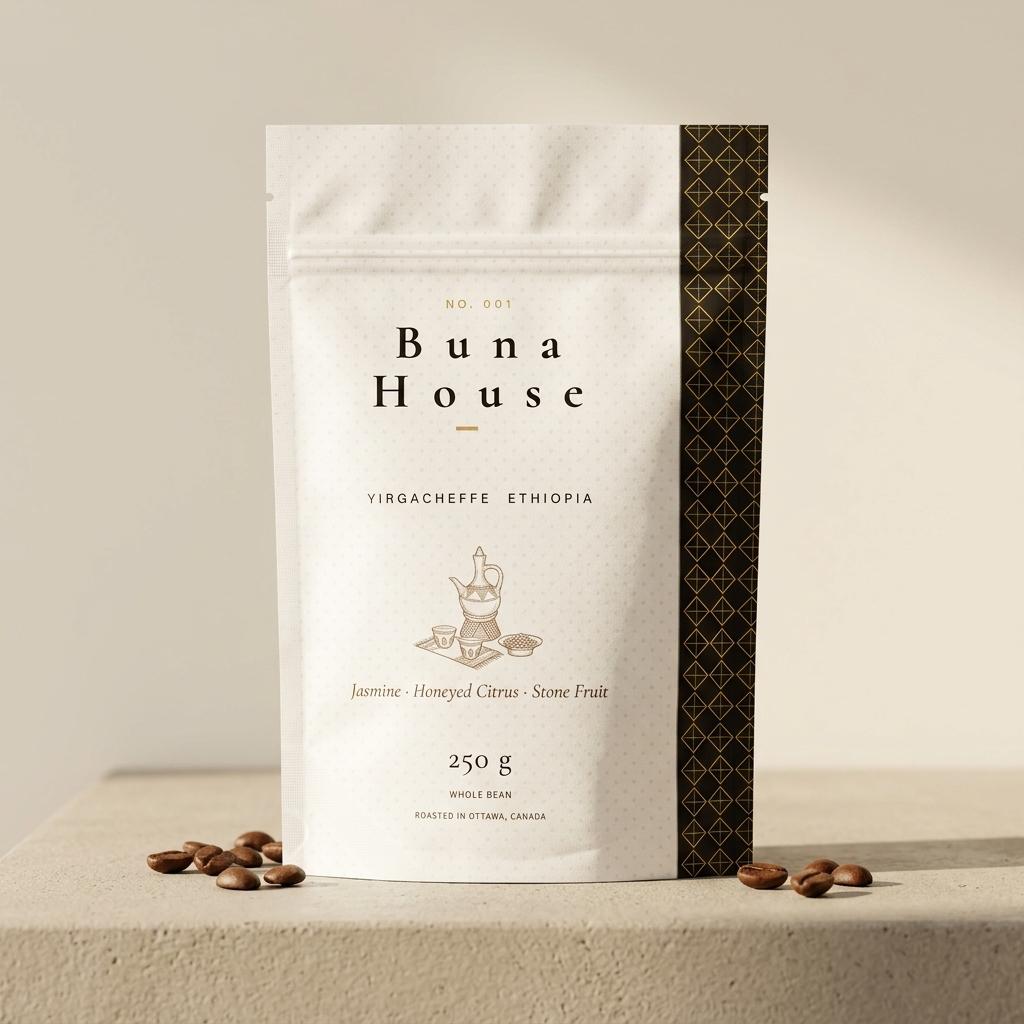
Batch 001
Yirgacheffe
Ethiopia · 2025–26
The Drop
The first bag
we'll ever ship.
Washed heirloom lot from the Yirgacheffe highlands — floral, citrus-forward, tea-like on the finish. Light-roasted in Canada within days of hitting the tray.
Origin
Yirgacheffe
Release
First Drop
Process
Washed
Roast
Light
Waitlist Perks
First to know.
First to buy.
Batch 001 is a limited drop with a hard public launch day. Sign up now and we'll email you a personal launch code the moment we're ready — good for a 24-hour early-buy window before the shop opens to the public. Waitlist members order first. Because supply is limited, that's the difference between a bag and a sold-out banner.
01
24-hour head start
Your personal launch code opens the shop 24 hours before public launch day. Waitlist buys first — everyone else buys what's left.
02
Best shot at a bag
Batch 001 is limited. Signing up early is the difference between securing a bag and reading a sold-out banner.
03
Founder updates
Roast notes, sourcing calls, and build logs — direct, before any of it hits public channels.
04
No noise
One drop, one email. No daily blasts. No spam. Unsubscribe any time.
Last call before launch
Batch 001.
First Drop.
Drop your email. Get founder updates, build-log notes, and your personal launch code the moment Batch 001 ships.
Launching In
Café or retail space?
Wholesale opens after Batch 001. Get on the wholesale list — first-drop partners get first pick when Batch 002 goes live.
Get on the wholesale list