Where CoffeeBegan.
The legend of Kaldi. The ritual of buna. The journey to the diaspora.
Coffee's Journey To Canada
The Discovery
Kaldi discovers coffee in the Ethiopian highlands. The Oromo people begin cultivating coffee around Harrar.
Fun Fact
The word 'coffee' comes from 'kaffa' — an Ethiopian region.
The Ceremony Begins
The buna ceremony becomes central to Ethiopian social life. Three rounds served: abol, tona, bereka.
Fun Fact
Burning frankincense during the ceremony isn't just tradition — it enhances the coffee aroma.
Coffee Spreads
Ethiopian coffee reaches Yemen, then Europe through the port of Mocha.
Fun Fact
Mocha coffee gets its name from the Yemeni port — but the beans often originated in Ethiopia.
The Diaspora
Ethiopian and Eritrean families begin migrating to North America, bringing buna traditions with them.
“My mom used to roast beans on the stove in our Toronto apartment. The smoke alarm would go off, but the smell? Worth it.”
Buna House Begins
Two diaspora founders launch Buna House to bridge the gap — authentic Ethiopian coffee, roasted in Ottawa.
Shop Our Coffee →
Ethiopian Highlands · ~850 CE
Meet The
Mascot
Our goat isn't just cute branding—it's history. Kaldi's goats were the first to discover coffee, dancing with energy after eating the cherries.
In Ethiopian culture, goats represent:
- Curiosity (they'll eat anything)
- Community (they move in herds)
- Resilience (they thrive in highlands)
Why no name?
He's every goat. He's the diaspora's collective memory of home. But if you have an idea...
From Green To Cup
We don't cut corners. We honor the journey of the bean.
Ethiopian Farms
Heirloom varietals grown at 1,800m+. Handpicked cherries from regions like Harrar and Yirgacheffe.
Import to Canada
We work with trusted importers. Green coffee arrives in 60kg burlap bags, preserving direct trade quality.
Roast in Ottawa
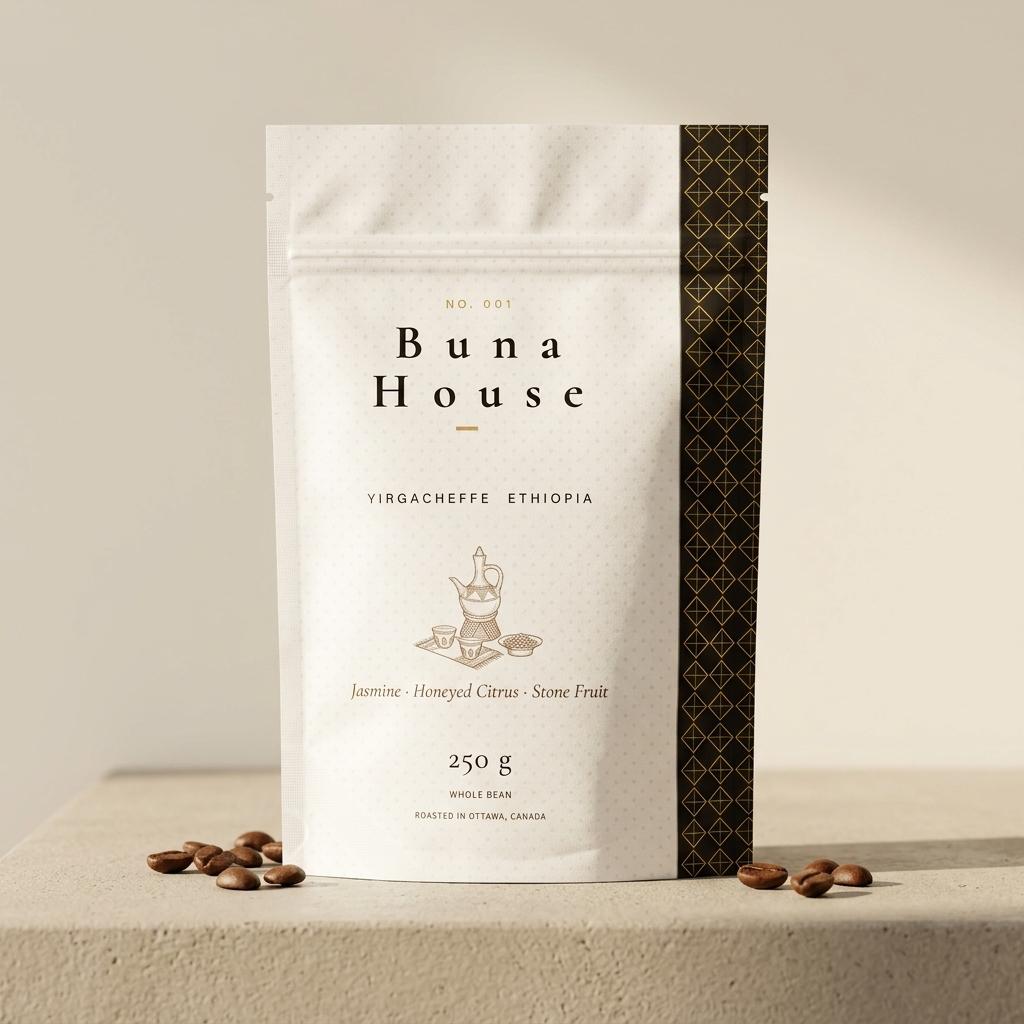
Small batches roasted to order. Harrar for bold espresso, Yirgacheffe for delicate filters.
Pack & Label
Sealed in kraft bags with one-way valves to keep CO2 out and freshness in. Packed locally.
Ship to You
Canada-wide shipping in 2-5 days. From roast to your door faster than grocery store shelves.
Fresh Roasted in Ottawa
Know Your Origins
Harrar Region
Harrar is one of the oldest coffee-growing regions in the world. The natural process gives it that bold, fruity, almost fermented complexity. It's the backbone of Buna House.
Blueberry jam, red wine, dark chocolate, winey body.
The Ceremony
It's not just a caffeine fix. It's time. Time to sit, to talk, to connect. In Ethiopia and Eritrea, the buna ceremony is the center of social life.
The Three Rounds
It's not just coffee. It's a progression of flavor, depth, and connection.
The Welcome
The strongest, most concentrated round. Served to the eldest or most honored guest first. Traditionally, this is the moment to catch up and welcome someone properly.
Think of it as your morning shot—bold, intentional, present.
Blueberry jam, red wine, dark chocolate.
The Conversation
Slightly lighter. The conversation deepens. This round is for storytelling, laughter, and real connection.
The afternoon coffee you share with a friend—still strong, but more relaxed.
The winey notes soften. More balanced, hints of apricot emerge.
The Blessing
Bereka means 'blessing.' The mildest round, meant to linger over. Traditionally, the host offers a blessing for the guest's journey ahead.
The Sunday evening cup you don't want to end—gentle, meditative, grateful.
Smooth, almost tea-like. Floral hints come through.
Beyond The Cup
Why Frankincense?
In traditional buna ceremonies, frankincense (or another resin) burns alongside the coffee. It's not random—the aromatic smoke purifies the space and enhances the coffee aroma. Modern adaptation: You don't need incense to enjoy Buna House coffee—but if you light some? You'll understand why the ceremony feels sacred.
Wait, Popcorn?
Yes. In many Ethiopian and Eritrean households, popped barley or popcorn is served alongside coffee. Why? It balances the bitterness (sweet-salty-bitter harmony) and is a snack that keeps conversation going.
Why So Low?
Traditionally, buna is served while seated on low stools or the floor. It's about equality. No one towers over anyone. Everyone is at eye level. The conversation matters more than the furniture.
Brewing At Home
Moka Pot Basics
Never used a moka pot? We'll show you how in 2 minutes—from grinding to pouring.
Ceremony at Home
Want to try the full ceremony? You don't need a jebena—a moka pot works beautifully.
Reusable K-Cup
Got a Keurig? Use our K-Cup Ready grind for real Harrar in 60 seconds.
Diaspora Voices
Real stories from the families, friends, and coffee lovers building this community.
Pass on the
Tradition
Every Moka Ritual Kit includes a children's booklet—the story of Kaldi, the dancing goats, and the buna ceremony, told in simple language with space for kids to draw their own buna time.
Illustration Preview
Girl reading booklet to Goat
Join The Ritual
From Toronto to Vancouver, diaspora families are bringing the ritual home. Tag #BunaHouseRitual to be featured.